Advertisement · Educational content
What researchers are studying

The plain kitchen ingredient women are building an evening habit around

It is not new, it is not exotic, and your grandmother almost certainly kept it in the cupboard. What changed is that researchers started looking at it through the lens of collagen, protein and appetite — and women started treating it as a routine instead of a dessert.

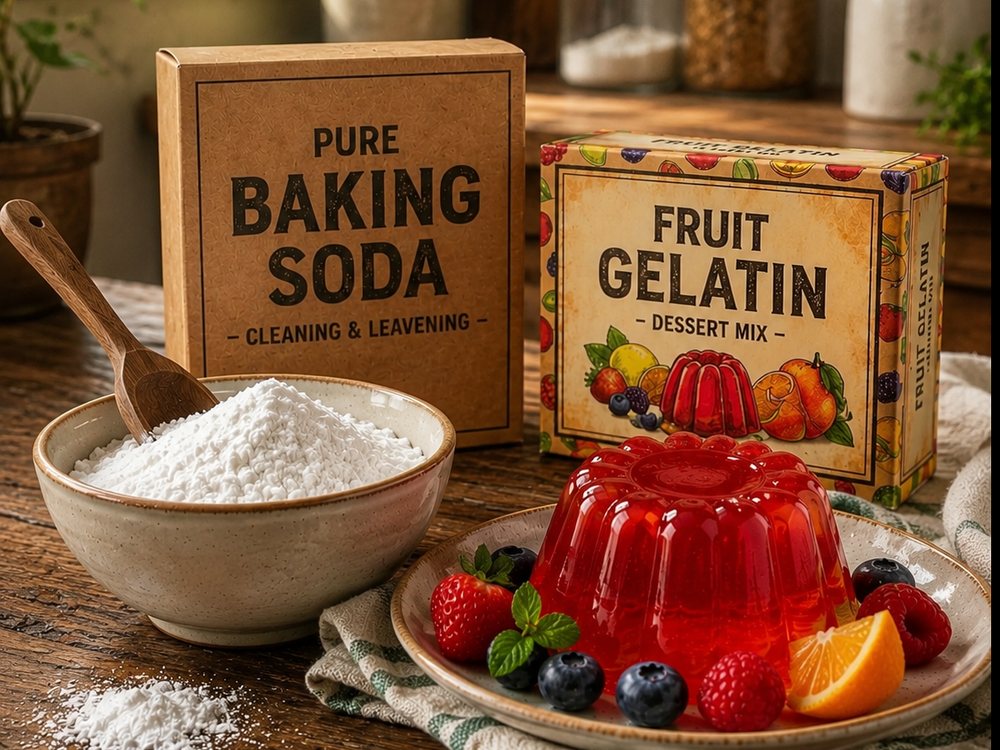
A box of baking soda and a box of fruit gelatin on a rustic wooden kitchen table, next to a bowl of white powder with a wooden spoon and a molded red gelatin dessert plated with strawberries, blueberries, raspberries and an orange wedge. Free videoPlay the video — what it is, and how the habit is built
Watch the free video

Free to watch. No sign-up, no email. It is narrated — turn your sound on.

Why this comes up now

Four things that quietly change in a woman’s body

None of these is a disease, and none of them happens overnight. They are ordinary shifts that researchers keep coming back to when they study women, food and daily routine.

01 Collagen production changes

Collagen is the structural protein that shows up in skin, hair, nails, tendons and joint tissue. The body makes its own, and how much it makes shifts over the years and across hormonal changes. Meanwhile, modern diets deliver very little collagen from food, because the parts of the animal that carry it — skin, bone, connective tissue — largely left the everyday plate.

02 Meals stop holding you

A plate built mostly from refined carbohydrates can leave you hungry again within the hour. Protein and fiber are the components most consistently associated with feeling satisfied after eating, and many women’s breakfasts and afternoon snacks are light on both — which turns into grazing, not willpower failure.

03 Body composition shifts

Two women can weigh the same and look and feel completely different, because the scale does not distinguish lean mass from anything else. Lean tissue tends to decline gradually with age and inactivity, and researchers studying that decline keep pointing at two everyday levers: enough total protein, and regular movement.

04 Traditional dieting works against the routine

The classic approach — eat much less of everything, hold on until the weekend — usually cuts protein along with everything else, leaves you hungrier, and is hard to keep for more than a few weeks. What tends to survive real life is not the strictest plan. It is the smallest one you can repeat without thinking about it.

Setting the record straight

Three myths about women’s metabolism

Repeated often enough, these become common sense. Here is what the research literature actually tends to say.

Myth

“After a certain age a woman’s metabolism collapses, and there is nothing to be done about it.”

Fact

Large studies of energy expenditure describe a gradual change over decades, not a switch that flips on a birthday. A meaningful part of the difference between two women of the same age tracks with body composition and daily activity — things that habits touch.

Myth

“Eating less of everything is always the answer.”

Fact

What the plate is made of changes how long it holds you. Protein and fiber are repeatedly associated with stronger satiety signals, which is why two meals with the same calories can leave you feeling completely different two hours later.

Myth

“Eating collagen is pointless — digestion just breaks it apart.”

Fact

It is true that collagen is broken down into peptides and amino acids like any other protein. What researchers are studying is whether those specific fragments circulate and may support the body’s own connective tissue. Either way, it still counts toward the day’s protein.

How women are doing it

The habit, in three steps

There is no schedule to keep up with and nothing to weigh. The whole point is that it is small enough to survive a bad week.

Step one

Attach it to something you already do

Habits stick when they ride on an existing anchor instead of asking for a new slot in the day. Most women who keep this pick the same moment every night — after dinner is cleared, while the kettle is on, right before the evening routine starts. The point is that you never have to decide when.

Step two

Keep the preparation boring

Warm liquid, stir until it dissolves, chill, or simply stir the cold-soluble kind into what you are already drinking. Paired with fruit, yogurt or milk it becomes something you actually look forward to instead of something you have to remember. If it takes longer than a few minutes, it will not last the month.

Step three

Measure consistency, not the scale

The useful number here is how many evenings out of seven you did it — not what the scale said this morning, which moves with water, sleep and your cycle. Give a habit a few weeks of honest repetition before you decide anything about it, and pay attention to how meals feel rather than to daily readings.

Where it comes from

This is not a trend. It is a kitchen that got simplified.

Long before anyone printed the word collagen on a label, it was already on the table. Cooks simmered bones and cuts full of connective tissue for hours because that was how you got flavor and body out of an animal you could not afford to waste. The broth that set firm in the fridge overnight, the aspics of European kitchens, the gelatin desserts that showed up at every birthday party — all of them are the same thing, arrived at by different routes.

Gelatin is collagen. Heat and time break the tightly wound collagen from skin and bone into a form that dissolves in hot water and sets when it cools. That is the entire trick, and it has been running in home kitchens for centuries. The modern addition is hydrolysis: taking that same protein a step further so it dissolves in cold liquid and can be stirred into anything without setting into a gel.

What disappeared was not the ingredient. It was the cooking. Boneless fillets, fast meals and long working days quietly removed the slow-simmered part of the plate, and with it a whole category of protein that used to arrive without anyone planning for it.

The part most people miss

Nobody in those kitchens was following a protocol. Collagen was a byproduct of cooking the whole animal, not a decision anyone made. The habit women are rebuilding today is not an invention — it is a deliberate way of putting back something the modern plate stopped delivering by accident.

Common observations

Six things women mention out loud

These come up constantly in conversations about routine and nutrition. They are common, they have many possible explanations, and none of them means anything on its own.

Hungry again in an hour

Breakfast or a snack that disappears fast and leaves you looking for something else before the next meal.

Skin feels drier

Less bounce than you remember, and moisturizer that seems to be doing less of the work than it used to.

Stiff joints after sitting

Knees and hips that need a moment to get going after a long stretch at a desk or in the car.

Same weight, different shape

The number on the scale barely moves, but clothes sit differently than they did a couple of years ago.

The afternoon dip

Energy that falls off a cliff mid-afternoon, usually a few hours after a light, carb-heavy lunch.

Nails that split

Nails peeling or breaking sooner than they should, and hair that feels thinner between the fingers.

Important: this is not a checklist and not a diagnosis. Every item above can have causes that have nothing to do with diet — including conditions that need real medical attention. If something concerns you, bring it to a doctor rather than to a web page.

What the habit sounds like

Three illustrative accounts

Please read this first: the three accounts below are illustrative composites written for this page. They are not quotes from identified customers, the names are invented, and nothing here should be read as evidence that a product works. They are included only to show what building this kind of routine tends to look like day to day.

“What actually changed was breakfast. It used to be coffee and whatever was on the counter, and I’d be starving by ten. Adding something with protein to it was the smallest change I’ve ever made and the only one I kept.”

Marcia, 46
Illustrative composite

“I stopped weighing myself every morning and started counting how many nights a week I actually did it. Six out of seven feels like a win. The scale never made me feel like that.”

Denise, 38
Illustrative composite

“My grandmother made this every Sunday and I never thought about it twice. Now it is the least complicated thing in my kitchen — it takes two minutes and my daughter asks for it.”

Karen, 52
Illustrative composite

Individual results may vary. These accounts are illustrative and are not a promise, guarantee or prediction of any outcome for any other person.

Questions women ask first

Short, direct answers before you press play.

What is hydrolyzed gelatin?

Gelatin is what you get when the collagen in skin, bone and connective tissue is broken down by heat and time — that is why a good broth sets in the fridge. Hydrolyzed gelatin, usually sold as hydrolyzed collagen or collagen peptides, is that same protein taken one step further, into much shorter chains.

The practical difference is behavior in liquid: regular gelatin needs hot water and sets into a gel as it cools, while the hydrolyzed form dissolves in cold liquid and stays liquid, so it can be stirred into coffee, water or yogurt. Nutritionally both are protein sources; researchers are studying whether the specific peptides may support connective tissue, and that work is ongoing rather than settled.

Is this a weight-loss program?

No. There is no meal plan, no calorie target and no promise about the scale here. The video is about collagen, protein, satiety and body composition — and about a small routine women are building around an ordinary ingredient.

Nothing on this page is presented as a way to lose weight, and no product mentioned is intended to treat obesity or any other condition.

Do I need to cook anything complicated?

No. The classic version is warm liquid, stir until dissolved, then chill until it sets. The cold-soluble version is one step: stir it into whatever you are already drinking or eating.

No special equipment, no scale, no recipe you have to follow to the gram. If a routine takes more than a few minutes, it usually does not survive a busy week — which is the whole point of keeping it this simple.

What if I have dietary restrictions or allergies?

Gelatin and collagen are animal-derived, so they are not vegetarian or vegan, and sources vary — bovine, porcine, or marine, which matters if you avoid fish or shellfish. Products also differ in flavorings, sweeteners and additives.

Always read the full label, and check with your doctor or a registered dietitian before adding anything if you have allergies, follow a restricted diet, are pregnant or nursing, take medication, or manage a kidney or liver condition.

Is this medical advice?

No. Everything on this page and in the video is general educational information about food, nutrition and routine. It is not medical advice, diagnosis or treatment, and it does not replace a conversation with someone who knows your history.

These statements have not been evaluated by the Food and Drug Administration. Nothing mentioned is intended to diagnose, treat, cure or prevent any disease.

Is the video free, and do I have to buy anything?

The video plays start to finish at no cost, with no account, no email and no payment required.

This page is sponsored content and contains affiliate links. If a product is mentioned in the video, buying it is entirely optional — and if you do, we may be compensated at no additional cost to you.

Is my data safe, and does it work on mobile?

You do not need to give us any personal information to watch. We do not ask for your name, email or phone number on this page. Like most websites, we use cookies and similar technologies to measure page performance and advertising — the details are in our Privacy Policy.

The video plays on phones, tablets and desktop in any modern browser, with nothing to install. It is narrated, so sound on or headphones will give you the best experience.

The ingredient itself is explained in the video

What it is, why researchers keep returning to it, and exactly how women are fitting it into an evening that is already full — in one short, narrated video.

Watch the free video now

Free. No sign-up. Educational content only.